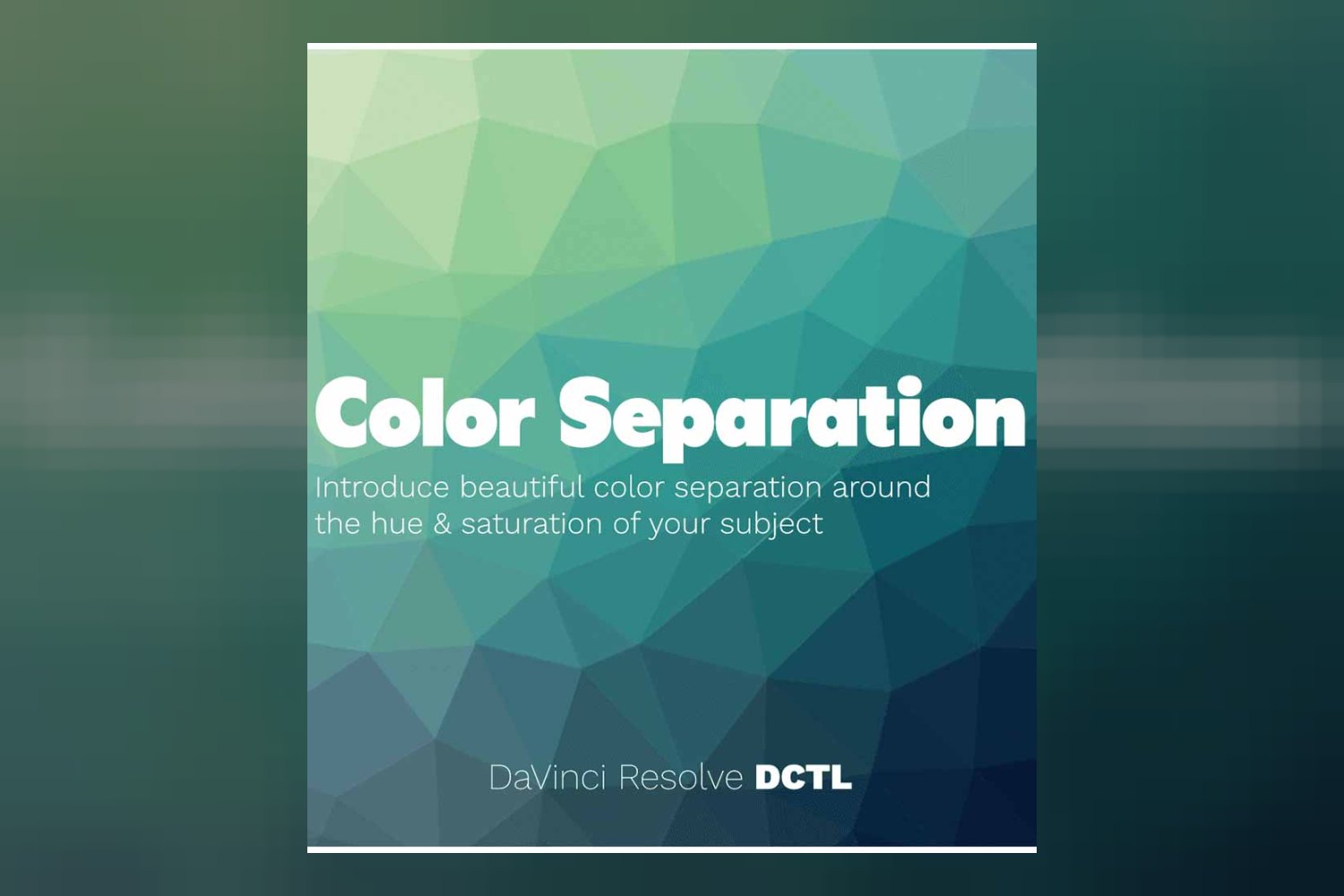
The Color Separation DCTL by henry bobeck is a dedicated tool for DaVinci Resolve designed to give your images a unique color pop or a cohesive monochromatic style. It’s aimed at colorists and editors who want more control over how colors interact, but the big catch is that it’s exclusively for DaVinci Resolve users.
What this DCTL actually does
According to Henry Bobeck LLC, this DCTL (DaVinci Resolve Color Transform Language) introduces color separation into your image. It does this by analyzing the hue and saturation of your subject, which sounds like it gives you a more nuanced way to make colors stand out from each other than just cranking up the saturation slider.
The creator says it also has a “Color Wash” mode. This sounds interesting for creative looks because it can compress the entire image color spectrum toward a single, chosen color, achieving unified monochromatic looks. So, you can either separate colors for more contrast or pull them together for a specific mood. The stated goal is to achieve an “extra 10%” of color contrast and make bold looks feel natural, which is a big claim for any color tool.
Where you can use it (compatibility)
This is straightforward: the Color Separation DCTL is compatible with DaVinci Resolve. That’s it. If you primarily work in Adobe Premiere Pro, Final Cut Pro, or Avid Media Composer, this DCTL won’t be of any use to you. It integrates effortlessly into the DaVinci Resolve workflow, which is good news if Resolve is your daily driver.
The creator doesn’t publish details on specific DaVinci Resolve versions needed, or system requirements like operating system or hardware. It also isn’t clear from the published facts if it works with the free version of DaVinci Resolve or if you need DaVinci Resolve Studio.
How it fits into your color workflow
Judging by what it does, this DCTL aims to replace or significantly speed up complex, manual adjustments you might otherwise build with multiple nodes and custom curves for hue and saturation. Henry Bobeck, the creator, is a colorist with a deep understanding of digital color correction and practical post-production needs. That background suggests the tool is built to address real-world challenges colorists face.
The promise of an “intuitive user interface” means you should be able to get these advanced color separation or monochromatic compression effects without a steep learning curve within Resolve. Instead of painstakingly isolating hues and pushing saturation or luma individually, this DCTL seems to offer a more automated, yet controllable, approach to refining color contrast and harmony.
Who this tool is best for
The Color Separation DCTL by henry bobeck targets a pretty wide range of users, but with a specific focus on DaVinci Resolve. It’s listed for professional colorists, filmmakers, and video editors. If you’re a seasoned professional constantly trying to squeeze out that “extra 10%” of visual punch from your images, this DCTL seems designed for that.
On the other hand, it also caters to “those new to advanced hue and saturation adjustment techniques.” This suggests it could be a good entry point for newer colorists in Resolve who want to achieve sophisticated looks without having to master every single color separation trick in the book first. If you’re already committed to DaVinci Resolve and want to experiment with bold, yet natural-looking, color contrasts or specific color wash styles, this looks like a strong candidate.
Reasons to skip the Color Separation DCTL
The biggest reason to skip this DCTL is if you don’t use DaVinci Resolve. Full stop. It’s a Resolve-specific tool, so if your primary NLE is anything else, it won’t work for you at all. Don’t even consider it.
Another reason is if your current color grading needs don’t involve the kind of specific color separation or monochromatic compression this DCTL offers. If you’re happy with basic color wheels, curves, and LUTs for your work, then adding another specialized tool might be overkill. Also, as mentioned earlier, the creator doesn’t publish details on system requirements or which specific versions of Resolve are supported, which can be a minor gamble if you’re running older hardware or software.
So, should you get it?
If you’re a DaVinci Resolve user looking to refine your color grades with sophisticated hue and saturation-based separation or unique monochromatic looks, then the Color Separation DCTL by henry bobeck looks like it could be a powerful addition to your toolkit. If you don’t use Resolve, or if these specific color goals aren’t part of your workflow, then it’s an easy pass.
Questions people ask
What does the Color Separation DCTL do?
It introduces color separation to an image based on the hue and saturation of a subject, and can also achieve unified monochromatic looks by compressing colors towards a chosen color in its "Color Wash" mode.
What color space/transfer function does the DCTL expect?
The creator doesn't say.
Can I use this with the free version of DaVinci Resolve?
The creator doesn't say if it's compatible with the free version of DaVinci Resolve or if DaVinci Resolve Studio is required.
What are the system requirements for this DCTL?
The creator doesn't publish specific system requirements, such as operating system versions or hardware specifications.
Prefer to buy directly from henry bobeck at full price? See the official page.